Our old friend Ivan Smith, retired teacher and citizen Internet pioneer, takes up the suggestion that distance education could play a big part in reforming Nova Scotia's unaffordable education system: Identify a topic in grade 4 math (or grade 3 or 5) that currently is particularly troublesome for students. (This topic should be something that can be covered properly in not more than three or four class periods.) Identify four teachers, two male and two female, who have substantial experience in teaching this topic, and who have had results significantly better than average. Arrange for each teacher to teach this topic in...

Many assume the Dexter Government made a mistake when it asked school boards to consider—and report back on—the consequences of a hypothetical 22 percent cut in their budgets. They say this gave the boards and the NSTU a license to frighten voters, and thus rally support for their comfortable status quo. Contrarian reader (and retired Education Dept. bureaucrat) Wayne Fiander puts the case vividly: Having served two premiers in this province, I can say with some confidence that a real education "right sizing exercise" is necessary to preserve public education. No government has yet tackled this issue correctly. They start...

In 1995, when Jim Nunn left the host chair at what was then called First Edition and moved to Toronto to take over co-hosting duties on the CBC Show Marketplace, some of his chums produced a tribute music video called, "Jim Nunn is in the Smoke Room." There are a few CBC in-jokes, but the piece, starring Jonathan Torrens, Mike Clattenburg, Keith Bradley, and Brian Heighton, never fails to crack me up. Other credits: Producer/Director: Cynthia Kent; Editor: Keith Bradley; Shooters: Steve Lawrence & Doug Carmichael. H/T: Sharlene Woods....

Faced with the conspicuous failure of the war on drugs, the Harper Government proposes to escalate it, as if doing more of something that failed is likely to succeed. Portugal took a different approach. On July 1(!), 2001, that country decriminalized the use and possession of all illicit drugs, a move many feared would accelerate social decay. The British Journal of Criminology has published a study of what actually happened: This paper examines the case of Portugal, a nation that decriminalized the use and possession of all illicit drugs on 1 July 2001. Drawing upon independent evaluations and interviews conducted with 13 key stakeholders in...

Readers have responded quickly to my challenge for new ideas to deal with the real crisis in provincial education funding, and the dominant theme so far is school size. Stephen Moore wants to eliminate small schools: My suggestion, though it will likely be unpopular, is to close smaller schools. There are many schools with extremely small classes sizes (and some instances of miltiple grades in one room). I agree that small classes can be beneficial and that small schools are a resource for rural communities; however, these are communities with declining enrollments and an aging demographic....

Contrarian has produced dozens of posts about the stupidity of airport security as practiced by the Canadian Air Transport Security Authority and the Department of Homeland Security. How about some sensible security ideas? Pilot and author Lane Wallace, guest-blogging for James Fallows, has a few ideas. She begins by noting that airports aren't the only places vulnerable to attacks like the one that killed 34 people in Moscow Monday:
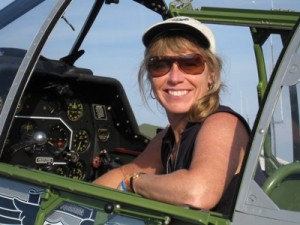
lane_wallaceRussian President Dimitri A. Medvedev has said that airport officials at Domodedovo must be held accountable for failing to prevent the attacks. I feel for those officials. Because the ugly truth of the matter is unless we want to prohibit more than five people from gathering in any given place, targets will exist for people willing to sacrifice their lives to hurt others. And it is impossible to police or screen public gathering places well enough to keep any attempted attack from succeeding... The bombing at Domodedovo happened to take place in a public area at an airport, so much of the alarm and reaction is (rightly or wrongly) going to focus on airport security. But really, the same bomb could have been detonated, and done just as much damage, raising the same issues of security and access, in any crowded, public area. Think, for a moment, how many people are in Grand Central Station at rush hour. It more than rivals any airport reception area. Or in Times Square on any given evening. Or in Macy's, the morning after Thanksgiving. Or at Rockefeller Center when the Christmas tree is lit. The list goes on and on. The point is, finding a place where a suicide bomb explosion will kill 30 or 50 people is just not that tough to do. And there is simply no way to eliminate that risk.
So what to do about it? Wallace offers three sensible suggestions after the jump:

Speaking on CBC Cape Breton last week, former Conservative Education Minister Jane Purves offered a rare, even-handed take on Nova Scotia's education funding debate: The government is genuinely looking for savings in education. I think it has been very good at promoting the truth that the syste has cost way more over the last 10 years but there are far fewer students. However, I’m wondering if in retrospect it was wise to floaat this 22 percent because they should have known what was going to happen: And what’s going to happen is that every board is going to come up with...

My parking ban post and Bruce Wark's rebuttal has sent readers to their keyboards. The ban enrages North End Halifax homeowner Cliff White: The rage is prolonged by the following sequence of events. Eventually it snows either during the day or during the night. If it's during the day and it's a modest amount the street may get plowed during the same day, with cars parked on both sides of the street. If we are lucky the plow might return in the next few days and do the street again, and if very lucky this will happen at night and some...

Web fixer and community participation guru Mike Targett points out that Contrarian is about a week away from a quarter-million page views....

This is a tired tune, but indulge me for a few bars. A few weeks ago, a Halifax physician went on Air Canada's website to book two round-trip flights: one to Sydney, Nova Scotia, 306 kilometers away; another to San Diego, 4,724 away (via Toronto). Air Canada charged $827 for the Sydney flight; $548 for SanDiego. That works out to $2.63/km for the Sydney flights vs. 11¢/km. for SanDiego. Years ago, some Sydney friends attended a wedding in St. John's, NF. Another wedding guest came from Cairo, Egypt. Guess who paid the lower fare? Try doing business with that handicap. Or as my...