Archive for: April 2011
That orange wave in QC? Blame Charest
A Nova Scotian who spent close to half his life in Quebec writes:
Harper’s undoing is Jean Charest.
Quebecers know they are going to throw out the scandal-plagued Charest as soon as they can, but they can’t do this with a strong BQ in Ottawa because it throws the federalist-nationalist balance out of whack.
Quebecers like to balance a strong federalist parliament in Ottawa with a nationalist Assembly in QC, and vice versa. They can’t vote Liberal on Monday because, well, Liberals are screwing up in QC. They also know that Harper can’t be seen to kowtow to Quebec, so they’d rather not have him in power or with too much influence in QC. Also, he’s not sympatico. But electing too many BQ’s when the PQ is destined for power at home is crazy because that gives far too much clout to the separatists. Everybody knows that.
It must have been quite a problem. But then Jack Layton won the French-language debate with smarts, charm and a street-savvy yet credible accent that made Duceppe sound like a fop. And so the orange wave began.
Ipso facto duodenum.
I agree with one caveat: According to some polls, the orange wave in Quebec had begun even before the debates.
A propitious time to revisit Mouseland
It never gets old.
Watch out for the little fellow with an idea.
A Constitutional scholar frets
Peter Russell, emeritus professor of political science at the University of Toronto and one of Canada’s foremost Constitutional authorities, says he has, “never been more worried in my entire lifetime of democratic citizenship in Canada about the possible outcome of an election.” Listen to what’s got him so “full of fear.” It’s a must-hear before you vote:
H/T: Stephen Wicary
Ekos seat projections
Ekos, the first pollster to notice the NDP wave, has released its latest seat projections for Monday’s vote, based on national, regional and, in some cases, sub-regional polling projected onto the results of the 2008 election.

Ekos latest telephone survey of 2,910 adult Canadians, including 2,672 decided voters, conducted between April 25-27, 2011, showed 34.8 percent nationally for the CPC; 27.5 for the NDP; 22.3 Liberals; 6.8 for the Greens; 6.1 for the Bloc Québécois (which contests only Quebec seats); and 2.5 per cent for independents or other parties. The results have a mathematical sampling error of plus or minus 1.8 percentage points, 19 times out of 20. The Conservatives are thought to be more likely to vote — they are older and express more commitment to their choice — and this could be worth a premium of 1-2 percentage points.
Ekos projects eight NDP seats in Atlantic Canada, three more than the party holds now. The sample size in our region is small, so this prediction has to be viewed as shaky. Potential pickups include South Shore – St. Margaret’s, Dartmouth – Cole Harbour, and Halifax West in Nova Scotia, and St. John’s South – Mount Pearl in Newfoundland. If you see any number of them fall to the Dipsters Monday night, something big could be afoot.
Halifax Wikileaks – the canonical list
Today’s massive Wikileak dump of US diplomatic cables from Canada includes 131 from the US Consulate in Halifax. For anyone interesting in foraging, here are the subject headings with links to the cables. Please let me know what you find.
2010:
- New Brunswick and Quebec Agree to Significant Modifications
- Nova Scotia’s Emera Inc.: A Unique Energy Entity Poised for
2009:
- ATLANTIC CANADA ENERGY UPDATE: ENERGY EXPORTS TO THE U.S.
- HMCS FREDERICTON TO JOIN NATO COALITION FLEETS
- ANOTHER SUNDAY, ANOTHER STORM: PREPARATIONS FOR TROPICAL
- NEW INTERNATIONAL BRIDGE AND PORTS OF ENTRY NEARING
- NOVA SCOTIA ELECTION RESULTS: NDP MAKE HISTORY IN OUSTING
- BIO DATA REPORT: DEXTER, DARRELL E. — PREMIER OF NOVA
- ATLANTIC CANADA ENERGY UPDATE: NEW BRUNSWICK AND
- FILMMAKING IN NOVA SCOTIA
- BIO DATA REPORT: LESLIE, MEGAN — MEMBER OF PARLIAMENT FOR
- SEVEN STOWAWAYS APPREHENDED IN HALIFAX
- ATLANTIC CANADA ENERGY UPDATE
- FALL OF NOVA SCOTIA GOVERNMENT LEADS TO JUNE 9 PROVINCIAL
- NEW BRUNSWICK STILL BULLISH ON NUCLEAR POWER DESPITE DELAYS
- NEWFOUNDLAND-LABRADOR OIL INDUSTRY: PRODUCTION MILESTONE
- NEW NOVA SCOTIA ENERGY MINISTER HANDLING GEORGES BANK
How the US views Darrell Dexter

Nice guy, as socialists go
When Darrell Dexter’s New Democrats swept to power in 2009, it fell to Harold D. Foster, the US Consul General in Halifax, to profile the new premier for his State Department colleagues. His assessment, in a cable sent one week after Dexter’s government took office, was among the diplomatic cables released by Wikileaks Thursday. Moneyquote:
Dexter is highly regarded by friends and political foes alike as a nice, down-to-earth kind of guy who has the interests of his constituents at heart. However, his victory came about primarily through his skill as a natural consensus builder, evidenced early on by his ability to bring together several differing factions within own his party. When he became NDP leader in 2001, Dexter inherited a party that still had a heavy influence of what pundits like to call the “fiery, socialist old guard”–members who were bitterly opposed to people like Dexter who wanted to move the party to a more centrist position on the political spectrum.
Post has had a longstanding cordial relationship with Dexter and his inner circle of advisors who come from both the old and young guards of the party. All, like their predecessors the Tories, attach great importance to issues of interest to the United States: fostering bilateral trade, increasing energy exports to the United States, and working cooperatively with the Canadian federal government on secure border issues. Dexter is also a frequent visitor to the United States, primarily to play golf even if (as he has confided) it means going by himself when none of his golfing partners is available to travel with him. Overall, post anticipates seeing this cordial relationship continue and expand as this well-liked and respected Premier settles down to implementing an agenda overwhelmingly embraced by the voters of Nova Scotia.
NS Wikileak: US Consul assesses anti-Iraq war sentiment in NS
On the evening of March 26, 2003, the US Consulate in Halifax sent two “sensitive but unclassified” cables to the State Department in Washington assessing “the view from Atlantic Canada” on the Iraq War begun by George W. Bush three days earlier. Then-Consul General Steve Kashkett also reported on a series of anti-war demonstrations in Halifax.
Following a week of discussions with then Lieutenant Governor Myra Freeman, various ministers in the John Hamm cabinet, local newspaper editors, a political pollster, businesspeople, and “some of our key military contacts here,” Kashkett came away with “the impression of a profoundly conflicted public.”

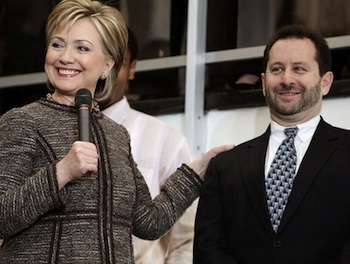
Steve Kashett, now vice president of the American Foreign Services Association, welcomes Hillary Clinton to the State Department Headquarters in Washington on her first day as Secretary of State
“Canadians in the atlantic provinces, most of whom consider themselves to have a staunchly pro-U.S. world view on most issues, are deeply divided over the war in iraq,” he wrote.
One of two cables points out that although university groups had vocally opposed the war, demonstrations had drawn hundreds, not thousands or tens of thousands, of participants.
“Of course, Halifax is a medium-sized provincial town with a smaller population than Toronto or Montreal, but the lukewarm response to the anti-war movement reflects deeper emotions here,” Kashkett concluded.
The other cable, sent an hour earlier, reported on three demonstations at the consulate’s Purdy’s Wharf II offices, and on a reception the consulate was forced to cancel at his residence after police warned that student groups planned to disrupt it.
“As is usually the case in the Maritimes, the protestors are conducting themselves in a restrained, mostly non-violent manner,” wrote Kashkett, who appeared to have detailed information from various local police.
“We are coordinating closely with the RCMP, the Halifax Regional Police, and our own building security people to minimize any risk,” he reported. “No protesters have targeted the CG residence as of yet, but RCMP contacts have confirmed that the location of the residence is known to local anti-war activists.”
Most of the sources referred to in the cables are unnamed, but the first cable reported that Rear Admiral Glenn Davidson, Commander of Canadian Forces Atlantic, “confided to Consul General today that there is fairly strong support for the war within the military services,” and “many of his navy officers and enlisted personnel feel that they should be part of the war effort.” The cable says Davidson believed the Chretien Government’s refusal may harm Canadian-US military ”interoperability,” a matter of “highest importance” to the Canadian military.
The text of the first cable follows:
UNCLAS SECTION 01 OF 02 HALIFAX 0091 SIPDIS SENSITIVE BUT UNCLASSIFIED DEPT FOR WHA/CAN E.O. 12958: N/A TAGS: PREL PGOV ASEC KPAO CA US SUBJECT: CANADIAN PUBLIC OPINION ON THE IRAQ WAR: THE VIEW FROM ATLANTIC CANADA REF: HALIFAX 0086 ¶1. SENSITIVE BUT UNCLASSIFIED - ENTIRE TEXT. ¶2. (SBU) CANADIANS IN THE ATLANTIC PROVINCES, MOST OF WHOM CONSIDER THEMSELVES TO HAVE A STAUNCHLY PRO-U.S. WORLD VIEW ON MOST ISSUES, ARE DEEPLY DIVIDED OVER THE WAR IN IRAQ. IN DISCUSSIONS DURING THE PAST WEEK WITH A WIDE RANGE OF PEOPLE INCLUDING THE LIEUTENANT GOVERNOR, PROVINCIAL GOVERNMENT MINISTERS, LOCAL NEWSPAPER EDITORS, A POLITICAL POLLSTER, BUSINESSPEOPLE, AND SOME OF OUR KEY MILITARY CONTACTS HERE, CG HAS GOTTEN THE IMPRESSION OF A PROFOUNDLY CONFLICTED PUBLIC. HALIFAX AND OTHER KEY ATLANTIC CITIES HAVE FAIRLY VOCAL STUDENT GROUPS AT THE MAJOR UNIVERSITIES WHICH HAVE BEEN OUTSPOKEN IN CRITICIZING THE WAR, AND WHICH HAVE ORGANIZED A NUMBER OF ANTI- WAR DEMONSTRATIONS (REFTEL) SINCE THE MILITARY CAMPAIGN STARTED. BUT THESE DEMONSTRATIONS HAVE ONLY DRAWN PROTESTERS IN THE HUNDREDS, NOT THE THOUSANDS OR EVEN TENS OF THOUSANDS THAT HAVE MARCHED ACROSS OTHER, LARGER CANADIAN CITIES. OF COURSE, HALIFAX IS A MEDIUM-SIZED PROVINCIAL TOWN WITH A SMALLER POPULATION THAN TORONTO OR MONTREAL, BUT THE LUKEWARM RESPONSE TO THE ANTI-WAR MOVEMENT REFLECTS DEEPER EMOTIONS HERE. ¶3. (SBU) OUR CONTACTS SAY THAT MOST ATLANTIC CANADIANS HAVE SERIOUS RESERVATIONS ABOUT ANY POLICY POSITION DICTATED FROM OTTAWA THAT PUTS CANADA AT ODDS WITH THE UNITED STATES. THIS PART OF CANADA IS PROUD OF THE FACT THAT IT HAS CLOSE TIES OF HISTORY, FAMILY, TRADE, AND CULTURE TO THE NORTHEASTERN UNITED STATES. ALTHOUGH MANY PEOPLE SHARE THE ANTI-WAR ACTIVISTQSQ CONCERNS OVER THE UTILITY AND TIMING OF THIS MILITARY CAMPAIGN AND OVER THE PERCEPTION THAT THE U.S. GOVERNMENT IS ACTING UNILATERALLY WITHOUT U.N. SANCTION, A STRONG CURRENT WITHIN LOCAL OPINION MAINTAINS THAT, NOW THAT THE WAR HAS BEGUN, FOR BETTER OR WORSE, IT IS IMPORTANT FOR CANADA TO STAND BESIDE ITS U.S. ALLY. MANY ATLANTIC CANADIANS BELIEVE THAT THE DISAGREEMENT BETWEEN OUR TWO COUNTRIES OVER WHETHER TO INITIATE MILITARY ACTION WAS ESSENTIALLY A DISPUTE OVER TACTICS, NOT OVER THE ULTIMATE GOAL OF ENDING THE INTERNATIONAL THREAT POSED BY AN OUTLAW REGIME IN BAGHDAD. TACTICAL DIFFERENCES, THEY ARGUE, SHOULD NOT BE THE CAUSE A SERIOUS RIFT BETWEEN TWO LONGSTANDING PARTNERS. ¶4. (SBU) AMBASSADOR CELLUCCIQS PUBLIC REMARKS YESTERDAY TO THE EFFECT THAT AMERICANS ARE DISAPPOINTED WITH CANADAQS FAILURE TO SUPPORT THE WAR HAVE GIVEN MANY ATLANTIC CANADIANS A JOLT. ALTHOUGH SOME DO APPEAR TO FEEL INSULTED AT SUCH CRITICISM, MANY OF OUR CONTACTS HAVE QUIETLY TOLD US THAT THEY BELIEVE THE AMBASSADOR WAS RIGHT TO EXPRESS HIS CONCERNS AND TO WARN OF THE POSSIBILITY THAT THERE MIGHT BE LONG-TERM CONSEQUENCES IN THE BILATERAL RELATIONSHIP. WHILE PEOPLE HERE ARE WORRIED ABOUT THE RAMIFICATIONS OF U.S. ACTIONS, THERE IS ALSO A PALPABLE DISCONTENTMENT WITH THE ACTIONS AND STATEMENTS OF PM CHRETIEN AND HIS GOVERNMENT. ATLANTIC CANADIANS BELIEVE THAT CROSS- BORDER COMMERCE AND TOURISM ARE VITAL TO THIS REGION, AND MANY FEAR THAT THE FEDERAL GOVERNMENT IS ADOPTING POSITIONS THAT COULD JEOPARDIZE THESE ESSENTIAL BILATERAL RELATIONS. ¶5. (SBU) PUBLIC OPINION IN THE ATLANTIC PROVINCES TENDS TO BE MORE CONSERVATIVE THAN ELSEWHERE IN CANADA, PARTLY BECAUSE HALIFAX IS HOME TO THE CANADIAN NAVYQS ATLANTIC FLEET AND TO MANY MILITARY FAMILIES WHICH HOLD THE U.S. MILITARY FORCES IN HIGH REGARD. REAR ADMIRAL GLENN DAVIDSON, COMMANDER OF CANADIAN NAVAL FORCES HERE, CONFIDED TO CG TODAY THAT THERE IS FAIRLY STRONG SUPPORT FOR THE WAR WITHIN THE MILITARY SERVICES. MANY OF HIS NAVY OFFICERS AND ENLISTED PERSONNEL FEEL THAT THEY SHOULD BE PART OF THE WAR EFFORT. ACCORDING TO RADM DAVIDSON, THE CANADIAN MILITARY ATTACHES THE HIGHEST IMPORTANCE TO DEVELOPING ITS "INTEROPERABILITY" AND COOPERATION WITH THE U.S. MILITARY SERVICES, AND MANY MILITARY PEOPLE HERE FEAR THAT CANADAQS REFUSAL TO PARTICIPATE IN IRAQ WILL DAMAGE THAT CLOSE BILATERAL RELATIONSHIP IN THE FUTURE. ¶6. (SBU) THE HEAD OF A WELL-ESTABLISHED PUBLIC OPINION POLLING ORGANIZATION IN NOVA SCOTIA TOLD CG THAT A MAJORITY OF CANADIANS IN THIS PART OF THE COUNTRY ARE PREPARED TO SET ASIDE THEIR QUALMS ABOUT THE U.S. DECISION AND ARE LEANING TOWARDS SUPPORT FOR THE U.S. WAR EFFORT, NOW THAT HOSTILITIES HAVE BEGUN. IN HIS VIEW, OTTAWA COULD EASILY MOVE PUBLIC OPINION IN THIS DIRECTION IF IT CHOSE TO DO SO. HE COMMENTED THAT THERE MAY BE MORE PRO-U.S. SENTIMENT IN OTHER PARTS OF CANADA THAN CURRENTLY APPEARS TO BE CASE, BUT IT IS DIFFICULT TO TELL BECAUSE THOSE OPPOSED TO THE WAR TEND TO SPEAK THE LOUDEST AND GET THE MOST MEDIA ATTENTION. KASHKET
The text of the second cable follows after the jump:
Surge roundup
The unprecedented rise in support for the NDP is provoking a lot of reaction from various thoughtful observers. Here’s a compendium.
From Frank Graves of Ekos Research, author of yesterday’s dramatic poll putting the NDP in second place nationally with a projected 100 seats, in a live chat this morning at ipolitics.ca:
Nothing is absolutely ruled out. But I think the public is answering Mr. Harper’s request for a majority with a pretty clear “No.” The intricacies of vote splitting might confuse this as late campaign shifts, but at slightly under 34 points, the Conservatives are well short of a majority. In fact, the implication of a majority between the NDP and the Liberals coupled with a diminished Conservative minority may pose some extremely interesting challenges.
The evidence from the surveys suggests that the NDP still have room to grow. Particularly in Ontario where they are rising, but have seen a dramatic spike up in second choice. They now lead nationally with first and second choice at 54 points — nearly 14 points ahead of the other contenders. So, yes still room to grow, but I don’t think the public have fully grasped where they have arrived and it is not outside of possibility that there will be a recoil effect. So whether the NDP wave is analogous to Clegg in the last UK election or perhaps Bob Rae in Ontario.
Graves had this to say about the Dips’ prospects in Atlantic Canada:
The Atlantic has changed dramatically in the past week where the NDP have bulled their way into what was a two-way race. The NDP began in the Atlantic in single digits and now lead. So that will be fascinating to see how that concludes.
From Andrew Coyne, @acoyne, Maclean’s National Editor and a genuine Lockean conservative (not the fake Harper kind), a series of exasperated tweets:
Oh for – arrgh!: “Harper is asking voters to consider whether they want their riding to be left outside the Tory tent.” http://bit.ly/gvEiiq
Where they serve the pork. RT @markdjarvis: http://is.gd/fI2xJS “People have a decision to make…abt whether they want to be at the table.”
But all the Tory partisans & professional shills will rationalize it to themselves that they’re the party of the taxpayer & free markets.
They’ve just utterly corrupted themselves & hope to corrupt the public. But then, if the public weren’t already corrupted, it wouldn’t work.
Politics in much of this country is just a two-way auction: state goodies in exchange for votes; votes in exchange for goodies.
Just friggin’ look at yourselves, Tories. Look at what you’ve become. Look at what you’re peddling.
From CBC’s Keith Boag, a strong critique setting forth Harper’s false statements about how parliamentary democracy works. [Unfortunately, the CBC provides no easy way to embed it.] As a Contrarian friend writes:
The most despicable thing Harper has ever done is lie to people about how their government works. It’s the big lie, so appalling no one can imagine it’s untrue.
Harper has done this twice: in the current election campaign, and in the prorogation scandal of 2008.
From former Daily News cartoonist Theo Moudakis, now inking for the Toronto Star, this take on Canada’s unnecessary election:
The redoubtable Elly Alboim has a pot pourri of fresh #elxn41 observations: That leadership numbers and party preference are starting to come into consonance; that the NDP surge can be viewed two ways, as likely to build and spread, or likely to whither in the face of inevitable attacks from Libs and CPCs; plus some knowledgeable analysis of the variance in polling numbers and the validity of seat projections.
This final week will be the Grimm brothers’ story book of election campaigns. The potential narratives are legion and becoming more and more compelling.
There is the potential Greek tragedy in Mr. Ignatieff and the Liberals. There is the obvious Cinderella story in Mr. Layton and the NDP. Mr. Harper may get his majority he has doggedly sought (the little engine that could) or keep rolling his ball up an endless hill. If you want an alternative that’s a bit more modern, he may finally kick the field goal or like Charlie Brown, have the football snatched away yet again.
On the same excellent Carleton Journalism School website, Chris Waddell and Paul Adams offer tart assessment of the Liberals’ campaign. First, Waddell:
First the party and Mr. Ignatieff have been ineffective in opposition in parliament and its campaign has done nothing to shake that view among it appears almost three-quarters of voters.
Second Liberal policy is not sufficiently distinct from the Conservatives on economic issues for the public to notice a difference, the Liberals haven’t campaigned on the economy and the party has no recognized spokesperson with gravitas on economic matters. Yet those issues remain very important with voters across the country and the NDP does offer a clear difference here although its policies have never faced much scrutiny. (The Liberals are trying to shine that spotlight on Mr. Layton this week.)
Third, the Conservative pre-election framing of Mr Ignatieff’s personality, character and interests has proven devastatingly effective with voters and Liberal campaigners are getting that regularly on doorsteps. Mr Ignatieff’s campaign hasn’t shaken that impression in the public’s mind.
And from Paul Adams:
The Liberals are caught in a historical dilemma. Unlike the situation during most of the 20th century, the Liberals are now alone among the parties, in that they have no roots as a populist party. The Conservatives have Reform as a predecessor. The NDP came from prairie populism and union activism. The Bloc from the separatist movement, and the Greens out of environmentalism.
But the Liberals have always been different. They have been a brokerage party with no clear ideological ground on which to stand. No one can ever remember a time when they did — except, perhaps, on the constitution and Quebec, which is hardly likely to help them now.
And as they try to perform a Gestalt in the final days of the campaign, they only reinforce the idea that while other parties stand for something, they don’t.
Finally, the Chronicle-Herald’s consistently reliable Stephen Maher notes two trends:
In 2004, Stephen Harper’s newly merged party took 24 Ontario seats with 31.5 per cent of the vote, pushing Paul Martin’s Liberals into a minority. In 2006, the Tories took 40 seats, with 35 per cent of the vote. In 2008, the Conservatives won 51, with 39 per cent of the vote.
Step by step, Harper’s team has moved in from the white, Protestant countryside, which by long tradition gravitates to the Tories, toward the multi-hued suburbs of Toronto, where significant numbers of immigrants and their children are embracing a modern Conservative message that has been carefully calibrated for them.
And…
Voters in Quebec, in contrast, have mostly turned their backs to Harper’s stern warnings, shocking everybody by warming up to Jack Layton.
After a strong French-language debate performance, Layton’s party is now leading the Bloc Quebecois. With his folksy Montreal street French and a policy book that has been carefully shaped over the years to reduce friction with nationalist Quebecers, Layton can now hope for a real harvest of MPs on Monday.
He has been preparing the ground for years. With little hope for immediate gains, he worked hard to make the NDP electoral effort in Quebec more than symbolic. The first seedling to sprout was the election of Thomas Mulcair, giving the party, for the first time, a talented bilingual spokesman.
Before concluding…
These developments in Quebec and Ontario are terrible news for the Liberals. Some national polls now show the Grits behind the NDP. I don’t believe, given the weight of tradition and the power of incumbency, that the NDP can surpass the Liberals on election day, but who knows?
As the election began, I thought Michael Ignatieff had a good chance of connecting with Canadian voters. Until the debates, when he failed to make a persuasive case for a Liberal government, it looked like his energetic and free-wheeling rally performances might give Canadians cause to reconsider him, setting up a momentum-building redemption narrative.
Instead, in the final days of the campaign, voters on the left are evenly divided between the Liberals and New Democrats, which is ideal for the Conservatives, since strategic voters may not know how to vote to block a Tory majority.
Preston Manning’s father, Ernest, dreamed of a political realignment in Canada, with a right-wing party and a left-wing party, rather than two parties of the mushy middle.
The goal of the movement, for decades, has been to squeeze the Liberals. By framing this election around the question of whether a coalition is a venial or a mortal sin, Harper is moving closer to realizing the Manning dream.
I’m not convinced Monday’s outcome will be any sort of dream for Harper, but that’s certainly one possible result.
What the hell is happening?
Ekos Research Associates, in a national poll with 2,783 respondents and a sampling error margin of 1.8 percentage points 19 times out of 100, has the NDP in second place nationally, as the Dips’ Quebec surge spreads to the rest of the country. The numbers are CPC 33.7; NDP 28.0; Liberal 23.7; Green 7.2; Bloc 6.2. What’s more, Ekos projects just 131 CPC seats vs. 100 for the NDP, 62 for the Liberals, and just 14 for the Bloc. Moneyquote:
Looking at these seat projections, the NDP and the Liberal Party combined would have a majority and 31 more seats than the Conservatives (as well as nearly 20 more points in popular vote). Indeed, It is hard to imagine how these totals would not produce the once unimaginable outcome of a Jack Layton led coalition government deposing Stephen Harper’s Conservative government.
Take a Valium and drink lots of caveats, of course. But something does seem to be up. The conventional wisdom has been that a nearly even split between the Liberals and the NDP would cinch a majority for Harper. Last Thursday, a perspicacious post by Elly Alboim, who may be Canada’s most experienced election observer, threw cold water on that assumption. His main points:
- More often than not, these sorts of break outs cannot be reversed.
- Often, the final results overshoot the initial wave.
- Even last week’s numbers would produce far more NDP seats than most realize.
- In a wave where voters are motivated, they make their way to the pollseven without slick get-out-the-vote operations
- Anti-Harper gains in one province (Quebec) can reverberate in others (Ontario, BC and elsewhere)
- In Ontario, it will take a very sizeable surge to win the NDP seats.
- Disparities between party preference and leader preference tend to narrow by voting day.
Alboim, who has covered 44 federal and provincial elections, observes:
I’ve been involved in dozens of CBC projection meetings where seasoned political reporters said that it was inconceivable that certain ridings and personalities were lost. And yet they were. Canada is littered with former cabinet ministers who never should have lost. Some examples: Roy Romanow fell to a gas station attendant in her 2os. In the same election, the CBC did not put a mobile in Grant Devine’s riding in order to save money because his Tories could not possibly win. Richard Hatfield was speechless the night he lost 58-0 to Frank McKenna– there were ridings that turned for the first time ever.
Read the whole thing on the Carleton University Journalism School’s excellent election blog.
Quebecers like to balance a strong federalist parliament in Ottawa with a nationalist Assembly in QC, and vice versa. They can’t vote Liberal on Monday because, well, Liberals are screwing up in QC. They also know that Harper can’t be seen to kowtow to Quebec, so they’d rather not have him in power or with too much influence in QC. Also, he’s not sympatico. But electing too many BQ’s when the PQ is destined for power at home is crazy because that gives far too much clout to the separatists. Everybody knows that.