[caption id="attachment_1356" align="alignright" width="150" caption="Malcolm Gladwell"][/caption] The New Yorker's Malcom Gladwell, author of The Tipping Point and Bink, takes on Wired editor Chris Anderson, author of The Long Tail and Free, in today's edition. Free is essentially an extended elaboration of [occasional Cape Breton summer resident] Stewart Brand’s famous declaration that “information wants to be free.” The digital age, Anderson argues, is exerting an inexorable downward pressure on the prices of all things “made of ideas.” Anderson does not consider this a passing trend. Rather, he seems to think of it as an iron law: “In the digital realm you can try...

We not only know placebos “work,” we know there is a hierarchy of effectiveness:
- Placebo injections work better than placebo pills
- Capsules work better than tablets
- Big pills work better than small
- The more doses a day, the better
- The more expensive, the better
- The color of the pill makes a difference
- Telling the patient, “This will relieve your pain” works better than saying “This might help.”
As the economist Joseph Stiglitz wrote in this month’s Vanity Fair, “In the developing world, people look at Washington and see a system of government that allowed Wall Street to write self-serving rules which put at risk the entire global economy — and then, when the day of reckoning came, turned to Wall Street to manage the recovery. They see continued re-distributions of wealth to the top of the pyramid, transparently at the expense of ordinary citizens.”
Well, not me, exactly. It was Verbal Remedy, a blogger for Open Salon, who lost the 17 lbs. (7.71 kg) without even trying. Her diet is reducible to six simple words, two of which are expletives. It comes with an easy-to-follow menu and, best of all, it's free. Reat it here....
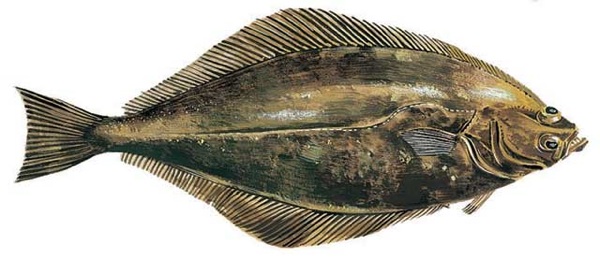
Contrarian reader LH who fished halibut in Alaska for eight years, the very place where Greg Easterbrook said Individual Transferable Quotas have created a sustainable fishery producing top quality fish. He writes:
Quotes, yes, definitely; Transferable, absolutely NO! Clearwater or some other fishing company would own them all either by outright purchase or yearly leasing. ITQ’s are the reason we have arm chair millionaires. [The quota owner] sits in his chair and collects $15,000 or more while someone else catches the fish. The money is in the paper not the fish... The most successfully managed fishery in the world is the Canadian lobster fishery. The resource is in good shape. One of the reasons: if you are licensed to catch it, then it is you who has to do so, full stop. Other factors are, of course, protection of the species by size, sex, harvest effort, and trap limits.Ah, but some would say the Maritimes lobster industry represents an informal application of property rights to the fishery. In many lobster grounds, fishermen occupy individual “berths,” where they enjoy an exclusive right to set traps. These property rights have no basis in law, but they are rigidly enforced by community custom.
Remember this guy? In 1981 and 1984, United Mine Workers of America president Richard Trumka spent weeks in Cape Breton, staving off two certification votes by the rival Canadian Mineworkers Union (CMU), a nationalist upstart opposed to affiliation with US parent unions. Angry Cape Breton miners turned to the CMU after the UMWA failed to provide strike benefits during a 13-week walkout in 1981. The new union twice signed up enough members to force certification votes, but Trumka outmaneuvered them, adroitly enlisting retired coal miners, including the colorful (if not buffoonish) Jake Campbell, to help turn back the challenges. For the last...
Of course it is possible that those reporting the symptoms of Wind Turbine Syndrome are more sensitive to sound and vibration than most people, or even than detection instruments. It’s also possible that other factors are at work. Could the illness be, to some extent, psychosomatic in nature?
Greg Easterbrook thinks Individual Transferable Quotas (ITQs) hold the key to saving vanishing fish stocks. He makes the case in the current Atlantic, part of an article called 15 Ways to Fix the World. After describing a delicious halibut dinner in Girdwood, Alaska, he writes: Good restaurant? Yes, but even better fishery management. About a decade ago, the Alaskan halibut catch was switched from a system of “catch all you can” in a very short period, to a system of tradeable permits. Now halibut season does not happen over a few chaotic days marred by colliding boats and overlapping lines, followed...