Category: Nova Scotia Politics

MLAs’ pay and public begrudgery – time for a retraction?

In the wake of Glace Bay MLA Dave Wilson’s surprise resignation while under forensic audit of his expense claims, a young Contrarian friend asks if I’m ready to retract my post all but dismissing the expense brouhaha.

Answer: I’m getting there.

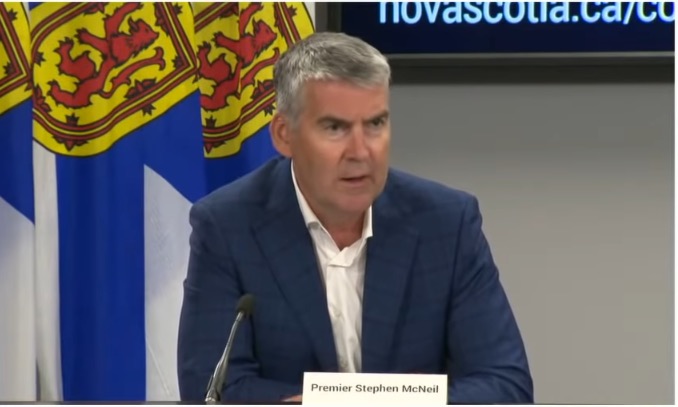
We don’t yet know the story behind Wilson’s abrupt departure, and I don’t wish to imply otherwise. But even before that news broke Friday, the premier’s ham-fisted attempts to resolve criticism surrounding his expensing of Barristers’ Society dues had me rethinking the issue.

Contrarian’s alter-ego is currently submerged in a writing assignment, so I will merely flag the topic for later elaboration.

Blaming unions

Saint Mary’s professor Larry Haiven thinks blaming unions for unnecessary snow days is silly:

This is part of a syndrome of “if in doubt, blame the unions.”  So convenient.  So wrong.

A few years ago I was taking a tour of the new Toronto opera house.  We were allowed to go everywhere except on stage, even though the stage was bare, with no current production going on.

larry_july_06-2-150One of the tour members asked the docent why we couldn’t go on stage.  The tour member said he had been on tours of all the great opera houses of Europe and had never been barred from the stage.  The docent looked serious and said “union rules.”  All of the tour members (except me) nodded their heads sagely in rueful agreement.

It just so happened that I had an interview with the head of the International Alliance of Theatrical Stage Employees (the stagehands’ union) on another matter later that day.  So I asked him if this were true.  He got very angry and told me that there was no union rule, no union prohibition and, in fact, the union was very much in favour of tours visiting the stage when there was no production going on.  He said that “union rules” have become a pernicious legend in his field.  I later phoned the management of the opera house to complain about the docent’s mistake.

What I found most interesting was not the docent’s duplicity but the tour group’s acceptance of it.  As a former union staffer and a person who researches and teaches about unions, I’m amazed at the difference between the real power that they actually lack and the perceived power people think they have.

As I said before, I regret making the union issue part of this discussion, because it permits people like Larry to wrap themselves in solidarity’s flag and ignore the core issues:

  1. In the management of risk, our society increasingly allows knee-jerk caution to trump common sense, and important social values like child-rearing suffer as a consequence.
  2. After their sub-par performance during Hurricane Juan was criticized, Environment Canada and the CBC began to over-hype forecasts of routine weather. Ironically, this monomaniacal focus on safety has created a very unsafe situation.
  3. Senior managers in our school system either belong, or kinda-sorta belong, to the teachers’ union. The apparent willingness of class-struggle buffs like Larry to countenance this absurdity is astounding.
  4. We have far too many snow days, and the ones we have apply to far too wide an area.

I honestly don’t know whether point three plays any major role in point four, but it ought to be changed anyway. No one above the level of small-school teaching principals ought to belong to the Teacher’s Union, and the law should be changed to reflect this.

As for the accelerating trend toward a New Jerusalem of ‘fraidy cats, Contrarian will continue to rail.

Snow days – another view

Educational consultant Paul W. Bennett, a former principal of Halifax Grammar School, thinks we should not be too quick to dismiss the connection between unsnowy snow days and the provisions of the teachers’ collective agreement.

[T]he key factor [in school closures] is the collective agreement which has been in place in Nova Scotia since the mid-1970s. In that sense, the Education Department is just as culpable as the NSTU.

The teachers’ agreement originally included an understanding that about five days a year would be written off as “throw-away” snow days. The Agreement with the NSTU also stipulates that if buses are cancelled and schools closed to students, then teachers do not have to report for duty. This is very unusual and has been eliminated in most other provinces.

What’s the impact?  No one in NS worries if four or five days are lost each year. The problem only surfaced when school boards canelled from eight to 14 full days last school year. Then it became apparent to everyone that there was no provising for reclaiming lost days, or any real policy to contain or even limit cancellations.

I am just completing a major comparative study of school storm days, demonstrating conclusively that Maritimers are the biggest “fraidy cats” of them all.  It also shows that Maritimers are the outliers when it comes to protecting valuable teaching-learning time and that this is a major factor contributing to our chronic “below Canadian average” student performance results.

Dept. of Amplification & Correction: School closures

Several readers have questioned, taken issue with, and even canceled subscriptions (!) over my criticism of overly cautious school closures, particularly my suggestion that union sympathies may play a role in unwarranted snow days.

Since when are school administrators (who make decisions about snow days) part of the teachers’ union? [TB]

Snow days are decided upon by the School Board. The teachers and their union have nothing to do with it. Teachers have to show up on snow days to babysit any kids dropped off by parents. The fact that you are so silly as to blame Unions—good heavens how silly!—I have now figured you out: Another Conservative who will blame the victims for all the country’s ills. [AMcG]

At least in HRSB, the school officials who make the call are school board Superintendents – not unionized, but management. [AB]

Another possible explanation is the requirement to please big, risk-averse insurance companies. [BW]

OK, so now I’ve done what I should have done before posting, checked with Peter McLaughlin, my ex-Daily News colleague who now speaks for the Nova Scotia Department of Education. Turns out the situation is at once more complicated than I suggested, and less clearcut than my interlocutors believe. Full explanation after the jump.

Read more »

A nation of ‘fraidy cats?

This is what a snow day looks like in Nova Scotia in 2010:
snow day-550

Ridiculous. Ludicrous. How does this happen? Is it yet more proof that Environment Canada/CBC weather hysteria has destroyed our ability to distinguish normal weather from that which is dangerous? Is it further evidence of our society’s atrophied ability to assess and manage risk? Of our obsession with danger? Have we become a nation of ‘fraidy cats? A friend offers an alternative explanation:

They haven’t filled their quota of snow days.

Gotta get ‘em in, in other words, like the employee who makes sure to take all her available sick days, lest she “lose” them. And it’s well to remember that the school officials who manage these decisions belong to the belong to… the teachers’ union.

An important meeting about Sable Island

In addition to her invaluable work on Sable Island, Zoe Lucas has, for the last five years,  hosted annual public meetings where scientists, government officials, industry representatives, and naturalists like herself have briefed the public on developments affecting the island.

The sixth of these sessions takes place at 7 p.m., Wednesday, March 3, at the Theatre Auditorium, McNally Building, Saint Mary’s University. This year’s meeting takes on special significance because of the secret deliberations currently underway between the Harper and Dexter governments over the level of protection to be afforded Sable in years to come.

Federal Parks Minister Jim Prentice and provincial Natural Resources Minister John Macdonell announced the negotiations in January, when they signed an MOU promising to designate the island either a National Wildlife Area or a National Park. Unfortunately, the MOU also stipulated that bureaucrats would make the decision as to which behind closed doors, with the public consulted only after matters were settled.

What’s worse, Prentice raised fears about the Park option when he spoke of  “encouraging” more people to visit and enjoy Sable, and speculated that private operators could be invited to transport tourists to and from the island. Some people cannot gaze at a spectacular natural landscape* without imagining “improvements.”

Nevertheless, some people who have worked long and hard to protect Sable against government indifference and cupidity favor the park option because it would provide broader legislative protection than a National Wildlife Area. They point to a few very remote parks in the far north that limit visitors and eschew the usual array of parks structures. I worry that, once a park is established, it will take only a hot dog like the current minister, and a few craven Parks bureaucrats, to open the floodgates.

Whatever their view of the park vs. NWA decision, I think most participants in the debate object to the highhanded way the two governments are excluding the public from their deliberations. Officials from both Parks Canada and the Canadian Wildlife Service have asked for time to speak at Wednesday’s meeting, so perhaps they will at least give us some insight into their private discussions.

All these issues are discussed and debated more fully at Zoe’s Green Horse Society website, at my Hands Off Sable Island Facebook Page (2,300 members!), and in previous Contrarian posts here, here, here, and here.

Wednesday’s meeting will also hear presentations from ornithologist Ian McLaren and biologist Bill Freedman—both eminent scientists with deep knowledge of Sable. Zoe Lucas, a highly accomplished autodidact whose life’s work has deepened public understanding of and respect for Sable, will report on the year’s happenings on the island. This will likely include a fresh round of her always inspiring photographs.

Finally, Zoe and Mark Butler of the Ecology Action Centre will lead a discussion on next steps for the island.

I hope that discussion will call on the bureaucrats to bring deliberations about the island’s future out into the open. I would like to hear whether legislation establishing a park (or a wildife area) could include provisions preventing a future minister from turning it into yet another ocean playground.  I would like to know why plans for protecting Sable are limited to those two options. Why not a unique legislative framework for protecting a unique island, rather than a cookie cutter approach?

Come early. It’s a big hall, but it’s always packed.

* To head off a flurry of email, I do recognize that Sable has been affected by human intervention over the last two centuries, most dramatically in the introduction of horses, who now play a significant role in the island’s ecology. But compared to any National Park in Atlantic Canada, it is pristine.

MLAs’ pay and public begrudgery – yet more feedback

Previous installments here, here, and here. A longish dissent from reader Jay Wilson:

The way you make it sound, we, the public, are the ones who indirectly caused this problem by forcing our poor beleaguered elected representatives underground and into making the kinds of reckless spending judgements they made. I take issue with that.

As you said in your blog, “Upon taking office, most MLAs set aside established careers in exchange for a job with far less security than comparable positions in the private or public sector.” That once was the case, for a good reason. Once upon a time, MLAs made very little money as elected representatives. To offset their costs of travel, constituency responsibilities, etc, they were given expense money. Fine.

Then more people from different walks of life started getting involved in politics who didn’t necessarily make as much as the usual assortment of doctors, lawyers and businesspeople who had mostly made up the elected ranks. Not to mention the complaints from the very sorts of individuals you referenced: People from higher-paying occupations who said it wasn’t enough to live on and they could make more in the private sector.

Over time, a new sensibility developed along the lines of “Let’s pay them a better salary so that they can afford to live while serving our best interests.” In the interests of fairness, the thought occurred to some that the money spent on expense accounts and the like could be decreased as now these elected officials would actually be making more. That’s not what happened.

In fact, as salaries continued to increase, so did money for expenses and then it diversified into a whole host of different expense categories. MLAs were getting money for everything and the kitchen sink, and who made these changes? Who increased their salaries and expense money? Who made the rules so deliberately ambiguous and full of holes so wide you could drive a tank through them? They did, behind closed doors and in quick legislative motions, with cursory mentions in the local press for the most part.

Please don’t try to excuse MLAs for their sorry behaviour. This is about three things: A pronounced sense of entitlement, a disconnect from reality and pure abject greed. Maybe it isn’t on the same scale as the scandals in Britain and even Newfoundland, but those three things are present in each situation and they are things we should all be vigilant against.

Read more »

MLAs’ pay and public begrudgery – more feedback

Previous installments here and here. Paul Pross, emeritus professor of public administration at Dalhousie and the author of several books on lobbying, NGOs, and the formation of public policy, thinks we are being too hard on our politicians:

I first met a politician fifty years ago. Since then, as a political scientist teaching at Dalhousie and, since retirement, as an active party member, I have met many more. A few turned out to be crooks. There were some self-important, pompous twits. But the majority were decent men and women who worked hard at a challenging and often stressful job.

They don’t deserve the abuse being heaped on them.

We should ask why MLA’s spend their allowances in the way they do.

For example, most MLAs seem to have bought cameras. Why? This is an electronic age and photographs are an important part of making the work of the MLA visible to voters. MLAs need photographs of meetings with constituents and the events they attend to put in newsletters, press releases and to use as videos on websites. Leaders and some other MLAs need professional quality equipment because, as Stefan Dion discovered, leaders can’t afford to look amateurish. Professional equipment can be expensive.

MLAs’ charitable donations have also been criticized. MLAs are approached by numerous charities and worthy causes. It’s hard for them to refuse, or even to give a small donation for major local projects such as a recreation centre or purchase of hospital equipment. So many politicians donate far more every year than most of us.

We clearly need updated and more explicit rules governing politicians’ expense accounts. But we should ensure that they adequately support legitimate political expenses. In fact, we have less need for highly detailed regulations than for rules that encourage respect for public money and discourage a culture of entitlement.

The media could help to achieve that if effort were put into showing the public exactly what politicians do when they are not sitting in the Legislature and why they spend what they do.

MLAs’ pay and public begrudgery – feedback

Contrarian reader Kirby McVicar responds to our post on MLAs’ pay and public begrudgery:

The question that springs to my mind is: “Who are you and what have you done with Parker Donham?”

Resigned MLA<BR>Richard Hurlburt

Resigned MLA Richard Hurlburt

What I hear you say is, ”Well, MLA’s only stole a little bit, and it’s the media’s and the public’s fault for not providing adequate salary.” Are you serious?

What does this line of thinking say to all the honest MLA’s who did not steal from the public purse: “You missed out on an opportunity we, the public and the media, set up for you. How stupid of you!”

I agree that politicians need an independent body to set remuneration policy that is binding, but this issue should not be confused with theft from the public purse.

Where is the CBC Parker, from the “Harry and Parker Show” who would have spent 15 minutes railing against such a rationale? Has the election of an NDP government outed you?

I was out of the country, but wasn’t it a Tory MLA who resigned? After the jump, more reader reaction.

Read more »

MLAs’ pay and public begrudgery

A friend asked recently why I had not written about the MLA expenses flap, and I confessed that I have trouble summoning much outrage over the issue. While I admire Brian Flinn’s dogged pursuit of the facts in AllNovaScotia.com, I fear that the public and the media are almost as much to blame for the problem as our lawmakers.

The public nurses an attitude of begrudgery toward politicians, and the media fans these embers at every opportunity. This is not our most attractive quality, and it makes it almost impossible for MLAs — who by definition must set their own salaries — to pay themselves appropriately for the work they do. So MLAs have, unwisely but understandably, developed a variety of secretive ways to pad their allowances.

A few observations seem in order:

  • On the facts adduced so far, an audit of the compensation received by 60-odd present and former MLAs turned up a small handful of obvious abuses, amounting to a few thousand dollars each, and a larger number of errors in accounting or judgment, amounting to less than a few hundred dollars each. Total recovery: far less than the cost of the audit.
  • Compared to recent expense scandals in Britain and Newfoundland, this is thin gruel. No Nova Scotia MLA built a swimming pool at public expense.
  • The media’s habit of lumping salary and expense reimbursement together is invidious. We expect MLAs to have constituency offices, and these require rent, salaries, furniture, postage, phones, electricity, computers, and sundry office equipment. We expect MLAs to travel frequently between their ridings and the capital, and this imposes real costs. To add these legitimate expenses to their base salary, and cite the total as “compensation,” is absurd.
  • While it is reasonable to expect MLAs to support large expenses with receipts, I am not sure I want lawmakers spending their time adding up slips from Tim Horton’s.
  • Many costs imposed on MLAs are not receiptable. You and I can brush past the minor hockey player in the supermarket checkout line, but an MLA cannot. They are hit up constantly for donations, gifts, handouts.
  • The circumstances of individual MLAs — remoteness from Halifax, size of riding, local culture of constituent service, committee duties — are almost infinitely varied. Any set of rules governing expenses will necessarily be arbitrary, and will beget examples that seem unreasonable.
  • The shaming of the premier into reimbursing the treasury for the cost of a leather briefcase was petty and unworthy of us.
  • When I began covering Nova Scotia politics 36 years (!) ago, an MLA’s job was considered part-time; most maintained other occupations to supplement their income. Not so today.
  • Upon taking office, most MLAs set aside established careers in exchange for a job with far less security than comparable positions in the private or public sector. A 2009 report on legislative salaries in Newfoundland and Labrador found that the average tenure for MLAs in that province over the preceding 20 years was 7.5 years.
  • Nova Scotia cabinet ministers make less than the deputies who report to them. Backbench MLAs make less than civil servants several steps down in the hierarchy.
  • Most MLAs work exceptionally long hours, especially in rural and Cape Breton ridings, where a culture of constituency service is the norm.

Yes, the compensation for MLAs should be open and above board, but the witless moralizing that has dominated the current brouhaha illustrates one reason it is not. I hope this will lead to a system in which MLAs receive a single, generous but all-encompassing salary, additional pay for cabinet service and a very short list of special house duties, and reimbursement for legitimate expenses, supported by receipts where practicable.

But if it does not, we can shoulder some of the blame ourselves. To paraphrase Pogo, “I have seen the enemy, and it is partly us.”

« Older Posts