
20 Aug Dal’s take on accessibility: equivocation and defensiveness
Last summer, disability rights activist Gus Reed, a member of the Minister’s Advisory Panel on Accessibility, helped draft a provincial discussion paper on proposed accessibility legislation [pdf]]. Last December, Reed reviewed all the submissions the government received in response to the paper, including a disappointing one from Dalhousie University.
Written by University Provost and Academic Vice-President Academic Carolyn Watters, Dal’s submission followed what might be called the HRM model of accessibility policy: earnest declarations of fealty to the principle of inclusion, followed by myriad excuses why the university can’t possibly be expected to do anything that advances accessibility on campus.

Dalhousie’s Hart Hall (1864)
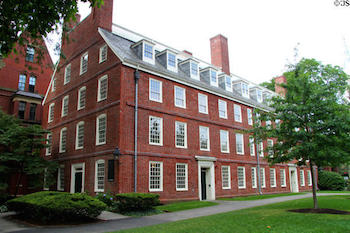
Reed was particularly sensitive to Dalhousie’s response because he spent most of his career as an administrator of Harvard University. Harvard’s oldest buildings are more than a century older than Dalhousie’s, and presumably that much harder to render accessible, but the famous school somehow manages to comply with the rigorous Americans With Disabilities Act, which enforces, on pain of prosecution, accessibility standards Dal students and teachers can only dream of.
Among other achievements, Reed is co-founder of the James McGregor Stewart Society, which advocates for people with disabilities. As he explained in a letter to Dal President Richard Florizone, Stewart was one of the university’s most storied graduates.
Stewart, who walked with a limp, was a Dalhousie student denied the opportunity to be a Rhodes Scholar in 1910 by an act of pure prejudice by Dean Richard Weldon, who said “Serious physical defects should be considered as rendering a candidate ineligible for the Rhodes Scholarship.”
Stewart, as you may know, went on to lead his Law School class, shaped Eastern Canada’s leading corporate law firm, was Chairman of Dalhousie’s Board of Governors, and was an authority on Rudyard Kipling. He met Kipling and left his extensive literary collection to Dalhousie. Ironically, the Kipling collection remains in an inaccessible location.
Reed’s letter went on to catalog the shortcomings of Dalhousie’s formal submission on accessibility legislation:
I anticipated an uplifting account of Dalhousie’s achievements and commitment, but found only equivocation, legalistic language and defensiveness….
This legislation presents an opportunity for institutions to affect values, social change and principle, to reaffirm Dalhousie’s commitment to higher education for all Nova Scotians. People with disabilities willingly pay taxes to support Dalhousie and are entitled to equal benefit of higher education they pay for.
Harvard’s Massachusetts Hall (1818)
Consider the number of people with physical disabilities enrolled at the Schulich School of Law. Two of five hundred ten. There is no acceptable explanation for this categorical failure: of diversity policy, of leadership, of recruitment, of admission, of procedure, of education. No wonder people with disabilities face discrimination at every turn and access to justice is so limited.I think Dalhousie has a special obligation to welcome this effort. As Dr. Watters has said, speaking about academic innovation, “[it] is an opportunity for us, as a community, to think broadly about credentials, programs and pedagogy in the context of known and, as yet, unknown disruptions, technological and societal.”
Here is a societal disruption headed your way with technology already playing a large role. Yet the issues raised are simply more barriers to be faced and overcome by those who only seek access and fairness. Dalhousie’s response has the potential to do considerable harm.
[Law School founder] Richard Weldon talked about “the duty which every university owes to the state, the duty which Aristotle saw and emphasized so long ago—of teaching young men the science of government.” Good words, but he meant “men” and white men at that. He was a man of his time. Maybe this is a chance to update the Weldon Tradition.
Please revisit your submission, valuing principle over implementation. I think the Minister deserves a thoughtful response, explaining how this effort aligns with Dalhousie’s purpose and ideals. Feel free to invoke caution, but embrace the change that is coming. This is as important for Dalhousie as for people who need access.
I hope to hear from you.
One month later, he’s still hoping. Florizone has not responded.