
28 May How news coverage of rare events distorts childrearing
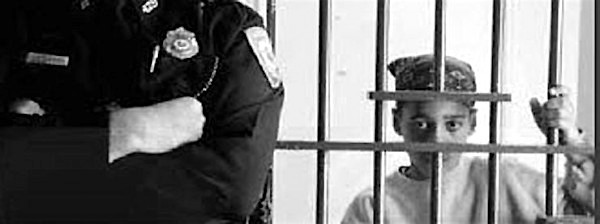
Yesterday, I saddled up a favourite hobby horse, the unintended and harmful impact of overprotecting children, a policy increasingly enforced by child protection workers and police. An interesting response from longtime Contrarian reader Tim Segulin points out the perverse dynamic by which the extreme rarity of stranger attacks on children all but insures the news media will turn them into sordid grief porn.
Sadly, children do get abducted, sometimes raped, sometimes even murdered. Thankfully these are very, very, rare events—so rare that when they do happen they make sensational headline news.
Despite the intense tragedy, this kind of story must be manna from heaven for news media. Stories these days include crying, pleading parents, shocked local community members, and understated, resolute police. (Remember when people who had lost their composure were never presented on TV?)
Such intense human interest stories have always put bums on seats before advertisers and sold newspapers. They are both absorbing television and implied cautionary tales, the very essence of news. The consequence seems to be that people remember the vague outlines of them for a long time and come to believe this kind of thing is happening all the time. I’ll bet you still recall the name Holly Jones.
[Here I would normally link to one of the stories commemorating the 10th anniversary of Jones’s death, but those I could find were so nauseatingly prurient, I have reluctantly linked instead to the Wikipedia entry about her killer. No disrespect intended.] Back to Segulin:
Crimes against children are by definition the ultimate motherhood issue, and that makes them political. Either the police are seen as community heroes for arresting “the bastard”—although at this point an alleged perpetrator’s guilt has not yet been proven in court—and reuniting the child with their grateful family, or their actions are seen to have failed to prevent a tragedy, and hard questions will inevitably arise.
Carefully managed, such tragedies offer excellent political opportunities to opposition parties:
- Why has this government repeatedly ignored police warnings about inadequate funding?
- Why are sentences for serious crimes so lax?
- Why does the parole system for which this government is responsible allow such people back on the street?
- Why didn’t the government see this coming?
Nobody will explicitly say so, but with the right management, careers in policing, law, news media, and politics can be made from such tragedies.
Although these events are really rare, they are hyped in such intrusive detail that they instil irrational fear in parents, simply because they dearly love their kids. It’s like fear of flying—no matter how often you quote the statistics showing it is much more dangerous to drive on public streets than to fly, people will believe what they want to.
After the jump, Segulin recounts the level of freedom he was shown as a child in a much larger city than Halifax, and the absurd steps he had to go through to volunteer on his son’s school trips.
When I was in elementary school I used to walk a kilometre or two home from school and thence roam the nearby suburbs visiting friends until sunset came and their parents would politely ask me to go home.
After we moved in grade six, I would travel 20 km each way to school by bus and train through a city the size of Toronto by myself. I became quite familiar with public transport, took day trips all over the city by train, and at 13, took my first interstate journey of several hundred kilometres alone, after explaining to my parents exactly what combinations of trains, buses and schedules I would use. I think my mother was a little uncomfortable at first but what I proposed seemed to make sense, and it worked out fine in the end. I think they saw it as a bit risky, but an an important step in personal growth and taking responsibility. I survived.
Today people are fearful of letting their kids walk the streets. How many nine year olds must wait to be driven tomorrow, rather than taking the bus today? Do I dare stop and talk to a preschooler who appears in distress? What would their mother think if she showed up and found some old guy talking to her little girl? Would I end up having to explain myself to the police, who would be obligated to take my particulars to be put on file somewhere—just in case?
To volunteer to help teachers manage my kid’s school ski trips, I was required to present a police record check, renewable every 3 years. I guess the opportunities to molest high school children on a ski hill or crowded bus must be legion.
As a “community service,” police often publicize the fact that a convicted criminal, released after serving time for a serious crime, is moving into a halfway house in the neighborhood. Police spokespersons sanctimoniously insist it is the community’s right to know who is living in their midst. The resulting paranoia (“I saw that awful man buying potatoes in Sobeys on Saturday!”) makes their job easier and more appreciated. How can you commit a serious crime (or find gainful employment) when everyone is eyeing you suspiciously? I wonder how this has helped Karla Teale’s school-age children?
We are often told that life is not risk-free, and Canadians are too risk averse. Yet there are major influences that encourage irrational fears and distort our perception of risks in life—often for the benefit of the those who promote fear.
Do you want to be held responsible, Parker, when some kid goes missing after you assured their mum that her fears of allowing them to walking home were overblown? You can’t be too careful, can you?
This last point is exactly why excessive security protocols such as we see in airports, the provincial legislature, and schools are so hard to roll back. Silly as they seem, no one wants to be responsible in case “something bad happens.”