
28 Apr A lazarus seabird expands to Nova Scotia
Posted at 23:55h
in That's life
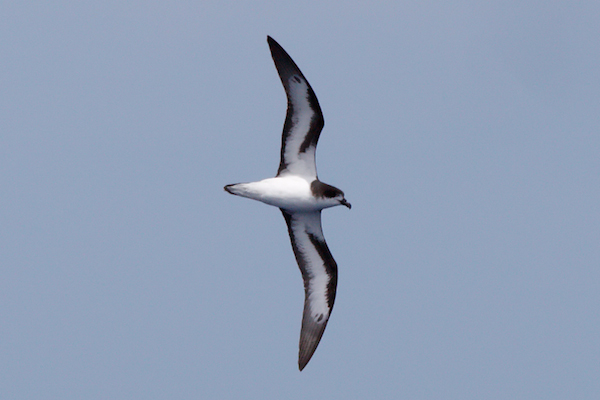
The canonical list of Nova Scotia birds got a new entry this month when ornithologists aboard a US research vessel south of Cape Sable Island spotted the first Bermuda Petrel ever observed in Canada.
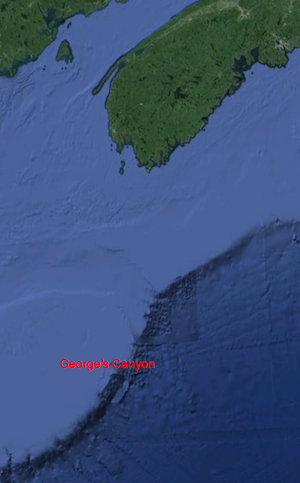 Michael Force and Nicholas Metheny, both contract Seabird and Marine Mammal Observers aboard the US National Oceanographic and Atmospheric Administration ship Gordon Gunter, spotted the endangered seabird while cruising across George’s Canyon, on the eastern edge of George’s Bank, in Canadian territorial waters.
Fun facts about the Bermuda Petrel:
- On Bermuda, the once abundant nocturnal bird is known as the Cahow, a name derived from its eerie cry, a sound so haunting it convinced early Spanish sailors the islands were inhabited by devils, and frightened them out of settling there.
- The ground-nesting birds made easy prey for dogs, rats, and especially cats brought to Bermuda by early British settlers. This so devastated their numbers that by 1620, Cahows were thought to be extinct.
- Belief in their extinction persisted more than 300 years, until 1951, when two ornithologists discovered 18 pairs nesting on suboptimal rocky islets in Castle Harbour.
- David B. Wingate, a 15-year-old boy who accompanied the ornithologists, grew up to be Bermuda’s first conservation officer, and devoted his life to saving the Cahow.
- Scientists have known for some time that Bermuda Petrels visit Canadian waters, because Cahows equipped with geo-loggers have been tracked as far north as Newfoundland. But this month’s sighting, 131 nautical miles south of Cape Sable Island, is the first visual and photographic record of their presence.
- In 2006, the world population of Bermuda Petrels was estimated at 250, with limited habitat and devastating storms as the biggest threat to their recovery. The ultimate conservation goal is 1,000 nesting pairs.
Photo credit: Chris Sloan. H/T: Nova Scotia Rare Bird Alert.