
28 Aug Lagniappe
A few months ago, an email from the Atlantic science blogger Alexis Madrigal introduced me to the word lagniappe, pronounced LAN-yap. It means a small bonus a merchant bestows on a customer, “something given over and above what is purchased” (Oxford English Dictionary). It’s akin to the 13th donut in a baker’s dozen, or those promotional mini bottles the Liquor Commission sometimes attaches to the necks of 40-ouncers, except it’s proffered only after the sale has been completed and paid for.
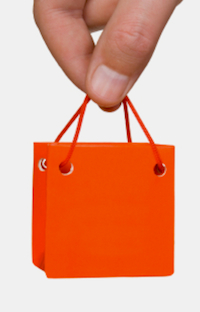 In current use, it’s mainly confined to the New Orleans area, where such petit gratuities were once a local tradition, albeit one resented by shopkeepers, who considered lagniappe a curse and collaborated to stamp it out.
Mark Twain liked the word, and wrote about it in Life on the Mississippi:
We picked up one excellent word—a word worth traveling to New Orleans to get; a nice limber, expressive, handy word—’lagniappe.’ They pronounce it lanny-yap. It is Spanish—so they said.
We discovered it at the head of a column of odds and ends in the Picayune, the first day; heard twenty people use it the second; inquired what it meant the third; adopted it and got facility in swinging it the fourth.
It has a restricted meaning, but I think the people spread it out a little when they choose. It is the equivalent of the thirteenth roll in a ‘baker’s dozen.’ It is something thrown in, gratis, for good measure. The custom originated in the Spanish quarter of the city. …If the waiter in the restaurant stumbles and spills a gill of coffee down the back of your neck, he says ‘For lagniappe, sah,’ and gets you another cup without extra charge.
I assumed it might be a Cajun word, perhaps of Acadian origin, but today, on Slate’s linguistics podcast, Lexicon Valley, Ben Zimmer, language columnist for the Wall Street Journal, explained it comes from Quechua, a native South American language spoken mainly in the Andes.
Joseph E. Gillet, a Belgian-born professor of Spanish at Bryn Mawr, traced its passage from the Andes to New Orleans in the April 1939 issue of the journal, American Speech. From Peru, it spread across South and Central America to the eastern shore of Panama, thence throughout the Caribbean, until it reached Puerto Rico and the eastern end of Cuba. In the late 1700s, when New Orleans was briefly part of New Spain, many people from Puerto Rico and Cuba came to the city, bringing lagniappe with them.
Along the way, use by local speakers of Spanish and French caused the word to morph from yapay (Quechua) to la ñapa (Spanish) to lagniappe (Creole).
As a lagniappe to this blog post, here’s a list of English words derived from Quechua: coca, coke, and cocaine (all from the coca plant); condor; guano; jerky; lagniappe; lima; llama; maté; poncho, puma; quinine and quinoa (which share the same Quechuan root); and vicuña.