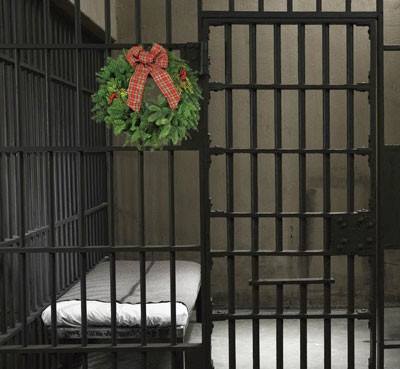
19 Dec Behind bars at Christmas
In her regular Saturday slot at The Halifax Examiner, the writer, poet, activist, and prisoners’ advocate El Jones has a moving account of what it’s like to be in prison over Christmas—for inmates themselves and for their families on the outside. Do not miss this.
El begins by writing about the problem of writing about people who may face retaliation for complaints she might voice on their behalf:
Talking about these stories is so difficult and telling them in detail — the kind of detail people often need to believe they are true — places the people already being punished at so much risk. Even writing this vaguely, I worry about who’s reading, who might get pulled in for questioning about what they’ve said, who might get disciplined as a result. So I try to write generally.
Some prisoners spend December 25 in solitary:
Last Christmas, someone I cared about was in solitary confinement too. Like the men in Burnside, he wasn’t being disciplined or in there for protection — he simply had been through his 90-day classification and assigned to a maximum facility. And since Springhill, where classification is done, is a medium security institution, all maxed inmates have to be put into solitary until they are transported. They get the phone for 20-30 minutes every three days, which is wheeled to them and they talk through a slot in the door. Food is given to them through a slot in the door. They are handcuffed when they leave their cell for showers, which they get once every two days. And since the prison wasn’t transporting inmates until February, this is how he lived for three months, through Christmas, through the New Year. Not because he did anything wrong, but simply because he was a different classification and transport was backed up.
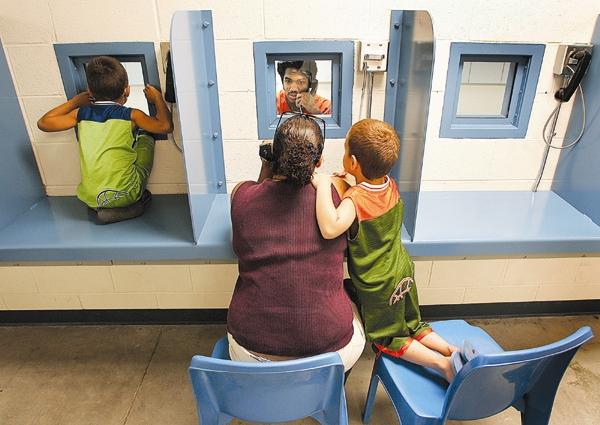
Imagine being the family member of someone in this situation. Imagine if you don’t get to talk to your child on Christmas because they don’t get the phone for another two days. Imagine if you’re a child and it’s your birthday but your parent can’t call you. Even if you believe the people in prison deserve this treatment, imagine what it does to everyone around them — if they are lucky enough to have family, that is. Many people don’t. There are many people in prison who never get mail, never get Christmas or birthday cards, never got a TV or CD player from their family to pass at least some time and stay sane inside, never got boxes and have to wear the correctional clothing all the time because they have no one to send them the small amount of clothes you’re allowed, or their family doesn’t have money. And what if you can’t write or read a card anyway? There are people who never use the phone because they have no one to call. There are mothers who can’t talk to their children this Christmas. There are people watching other people go to the socials to see their families, and they have to wait back on the range alone. And then maybe they act out because they can’t deal with the pain, and then they get taken to solitary, because they’re a discipline problem. And who can show pain inside, who can be vulnerable? So some people fight or yell instead, and then we call them hardened cases.
El includes first person commentaries from two prisoners. She worries aloud about whether she is exploiting those she writes about. She talks to her sister, a criminal lawyer, who describes the system’s last minute rush to get eligible prisoners paroled for Christmas. She explores our overuse of solitary, and what that means on Christmas. She includes an amazing selection of photos from inside. It’s a tour de force.
[Disclosure: In a Facebook conversation, I played a tiny role in persuading El to write on this topic.]