
27 May How to make children truly unsafe—updated
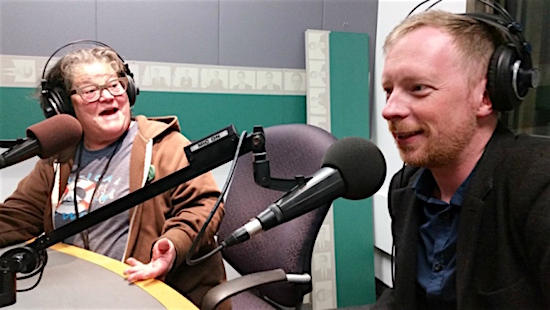
The best thing about this CBC story, which plumbs the perils of being kind to strange children, is the photo of Jane Kansas and Bill Wood.
The worst is the evil practice it exposes: conditioning children to be fearful of everyone and everything; conditioning grownups not to engage children under any but the most rare and strictly supervised circumstances, such as Thanksgiving dinner with the cousins.
We are acclimating our children to a sterile, cosseted, predictable, and straited world—in short, a world that does not exist. In the process, we deprive them of the opportunity to interact with Kansas, Wood, and their ilk.
Don’t go out of my sight. Don’t explore the world. Don’t take chances. Don’t make mistakes you might learn from. And heaven forfend, don’t board a school bus while white flakes drift magically from the sky.
We ill-prepare children for life, and—contrary to the risk brokers—by doing so we make them less safe, not more so.
[Update] I overlooked this CBC story, linked to in the CBC piece about Kansas and Wood, about a stay-at-home mother in Winnipeg who received two intrusive visits from a Child Protection Worker after an anonymous complaint that her children, Age 10 and 5, were playing in the back yard.
She said she was asked about her children’s level of safety, and questions such as what she does when she lets her kids outside, whether they knew what to do if a stranger approached, whether she and her husband drink or do drugs, and whether they’ve had past CFS involvement.
The worker inspected her children’s bedrooms and the inside of her fridge, and asked about family supports and finances.
For the crime of letting their children play in a fenced backyard. Words fail me.
A spokes person for the agency told the CBC:
Children under the age of 12 may be left without direct supervision, but there needs to be some provisions around the safety of the child,” said Stoker. That includes factors like the age of the child, their location, whether there’s a safety plan or supervision plan, the amount of time left unattended and a safe environment.
All this, of course, under the not at all veiled threat of having the children apprehended (read: stolen by the state) if the terrified parent did not cooperate with this incredibly intrusive, warrantless search.
When I think about how those DCS-approved “factors” might have applied to my now middle-aged children, the list goes something like this:
- Age of child: 5 and up.
- Location: Kempt Head, a largely uninhabited area of several square kilometres.
- Safety plan: One long blast on the fog horn, start making your way home; several short blasts, come home immediately.
- Supervision plan: The 10-year-old supervised the 5-year-old, often arbitrarily.
- Amount of time left unattended: after school ’til supper; after supper ’til dark; all day on weekends.
Hazards popular with our kids included: a farm pond full of frogs and salamanders, a barrachois pond, the Bras d’Or Lake, row boats, fishing hooks, thin ice, sleds, ice clampers, horses, cows, electric fences, geese, barbed wire, a very occasional bear or moose, gypsum sinkholes, deep woods. All in all, a pretty sweet childhood, thank you very much.
A few centuries ago, when I was 11, my parents began letting me sail our little daysailer alone on the bay near our house. One day when I was a mile or more from our dock, a sudden gust of wind capsized the boat. Fortunately, two strangers came along in a motor boat and towed me home. (That’s strangers. Rhymes with dangers.)