
29 May Kids are safer outdoors
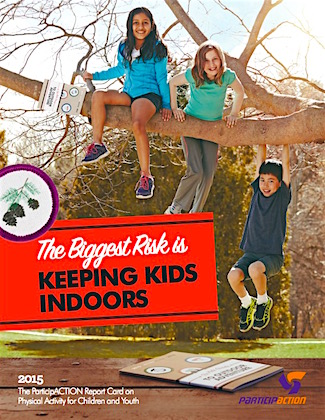 In response to Friday’s post lamenting the overregulation of childhood play, Monika Dutt, Medical Officer of Health for Cape Breton, Antigonish, and Guysborough, points to a Participaction report, The Biggest Risk is Keeping Children Indoors, and highlights three main points:
- The odds of total stranger abduction are about 1 in 14 million based on RCMP reports. Being with friends outdoors may further reduce this number.
- Broken bones and head injuries unfortunately do happen, but major trauma is uncommon. Most injuries associated with outdoor play are minor.
- Canadian children are eight times more likely to die as a passenger in a motor vehicle than from being hit by a vehicle when outside on foot or on a bike.
Advocates of overprotective parenting, like advocates of constant school closures for trivial weather events, often try to shut down debate by saying, “If only one child is saved from an injury…” This logic works if you only consider one side of the ledger, the bad things that can happen when children are allowed to play unsupervised. The Participation report points out the other side to the ledger, the potential negative health and safety consequences from swaddling children in cotton batten.
A few other nuggets:
- Hyper-parenting limits physical activity and can harm mental health.
- When children are closely supervised outside, they are less active.
- Children are more curious about, and interested in, natural spaces than pre-fabricated play structures.
- Children who engage in active outdoor play in natural environments demonstrate resilience, self-regulation and develop skills for dealing with stress later in life.
- Outdoor play that occurs in minimally structured, free and accessible environments facilitates socialization with peers, the community and the environment, reduces feelings of isolation, builds inter-personal skills and facilitates healthy development.
Each of these assertions is footnoted in the original report.