On the evening of March 26, 2003, the US Consulate in Halifax sent two "sensitive but unclassified" cables to the State Department in Washington assessing "the view from Atlantic Canada" on the Iraq War begun by George W. Bush three days earlier. Then-Consul General Steve Kashkett also reported on a series of anti-war demonstrations in Halifax.
Following a week of discussions with then Lieutenant Governor Myra Freeman, various ministers in the John Hamm cabinet, local newspaper editors, a political pollster, businesspeople, and "some of our key military contacts here," Kashkett came away with "the impression of a profoundly conflicted public."
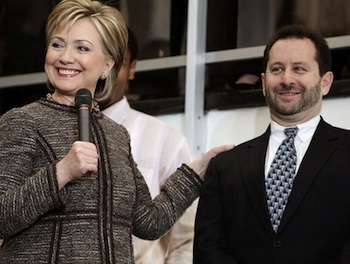
[caption id="attachment_7856" align="alignright" width="350" caption="Steve Kashett, now vice president of the American Foreign Services Association, welcomes Hillary Clinton to the State Department Headquarters in Washington on her first day as Secretary of State"]
[/caption]
"Canadians in the atlantic provinces, most of whom consider themselves to have a staunchly pro-U.S. world view on most issues, are deeply divided over the war in iraq," he wrote.
One of two cables points out that although university groups had vocally opposed the war, demonstrations had drawn hundreds, not thousands or tens of thousands, of participants.
"Of course, Halifax is a medium-sized provincial town with a smaller population than Toronto or Montreal, but the lukewarm response to the anti-war movement reflects deeper emotions here," Kashkett concluded.
The other cable, sent an hour earlier, reported on three demonstations at the consulate's Purdy's Wharf II offices, and on a reception the consulate was forced to cancel at his residence after police warned that student groups planned to disrupt it.
"As is usually the case in the Maritimes, the protestors are conducting themselves in a restrained, mostly non-violent manner," wrote Kashkett, who appeared to have detailed information from various local police.
"We are coordinating closely with the RCMP, the Halifax Regional Police, and our own building security people to minimize any risk," he reported. "No protesters have targeted the CG residence as of yet, but RCMP contacts have confirmed that the location of the residence is known to local anti-war activists."
Most of the sources referred to in the cables are unnamed, but the first cable reported that Rear Admiral Glenn Davidson, Commander of Canadian Forces Atlantic, "confided to Consul General today that there is fairly strong support for the war within the military services," and "many of his navy officers and enlisted personnel feel that they should be part of the war effort." The cable says Davidson believed the Chretien Government's refusal may harm Canadian-US military "interoperability," a matter of "highest importance" to the Canadian military.
The text of the first cable follows:
UNCLAS SECTION 01 OF 02 HALIFAX 0091

SIPDIS

SENSITIVE BUT UNCLASSIFIED

DEPT FOR WHA/CAN

E.O. 12958: N/A
TAGS: PREL PGOV ASEC KPAO CA US
SUBJECT:  CANADIAN PUBLIC OPINION ON THE IRAQ WAR:
THE VIEW FROM ATLANTIC CANADA

REF:  HALIFAX 0086

¶1.  SENSITIVE BUT UNCLASSIFIED - ENTIRE TEXT.

¶2.  (SBU) CANADIANS IN THE ATLANTIC PROVINCES, MOST OF WHOM
CONSIDER THEMSELVES TO HAVE A STAUNCHLY PRO-U.S. WORLD VIEW ON
MOST ISSUES, ARE DEEPLY DIVIDED OVER THE WAR IN IRAQ.   IN
DISCUSSIONS DURING THE PAST WEEK WITH A WIDE RANGE OF PEOPLE
INCLUDING THE LIEUTENANT GOVERNOR, PROVINCIAL GOVERNMENT
MINISTERS, LOCAL NEWSPAPER EDITORS, A POLITICAL POLLSTER,
BUSINESSPEOPLE, AND SOME OF OUR KEY MILITARY CONTACTS HERE, CG
HAS GOTTEN THE IMPRESSION OF A PROFOUNDLY CONFLICTED PUBLIC.
HALIFAX AND OTHER KEY ATLANTIC CITIES HAVE FAIRLY VOCAL STUDENT
GROUPS AT THE MAJOR UNIVERSITIES WHICH HAVE BEEN OUTSPOKEN IN
CRITICIZING THE WAR, AND WHICH HAVE ORGANIZED A NUMBER OF ANTI-
WAR DEMONSTRATIONS (REFTEL) SINCE THE MILITARY CAMPAIGN STARTED.
BUT THESE DEMONSTRATIONS HAVE ONLY DRAWN PROTESTERS IN THE
HUNDREDS, NOT THE THOUSANDS OR EVEN TENS OF THOUSANDS THAT HAVE
MARCHED ACROSS OTHER, LARGER CANADIAN CITIES.   OF COURSE,
HALIFAX IS A MEDIUM-SIZED PROVINCIAL TOWN WITH A SMALLER
POPULATION THAN TORONTO OR MONTREAL, BUT THE LUKEWARM RESPONSE
TO THE ANTI-WAR MOVEMENT REFLECTS DEEPER EMOTIONS HERE.

¶3. (SBU) OUR CONTACTS SAY THAT MOST ATLANTIC CANADIANS HAVE
SERIOUS RESERVATIONS ABOUT ANY POLICY POSITION DICTATED FROM
OTTAWA THAT PUTS CANADA AT ODDS WITH THE UNITED STATES.  THIS
PART OF CANADA IS PROUD OF THE FACT THAT IT HAS CLOSE TIES OF
HISTORY, FAMILY, TRADE, AND CULTURE TO THE NORTHEASTERN UNITED
STATES.  ALTHOUGH MANY PEOPLE SHARE THE ANTI-WAR ACTIVISTQSQ
CONCERNS OVER THE UTILITY AND TIMING OF THIS MILITARY CAMPAIGN
AND OVER THE PERCEPTION THAT THE U.S. GOVERNMENT IS ACTING
UNILATERALLY WITHOUT U.N. SANCTION, A STRONG CURRENT WITHIN
LOCAL OPINION MAINTAINS THAT, NOW THAT THE WAR HAS BEGUN, FOR
BETTER OR WORSE, IT IS IMPORTANT FOR CANADA TO STAND BESIDE ITS
U.S. ALLY.  MANY ATLANTIC CANADIANS BELIEVE THAT THE
DISAGREEMENT BETWEEN OUR TWO COUNTRIES OVER WHETHER TO INITIATE
MILITARY ACTION WAS ESSENTIALLY A DISPUTE OVER TACTICS, NOT OVER
THE ULTIMATE GOAL OF ENDING THE INTERNATIONAL THREAT POSED BY AN
OUTLAW REGIME IN BAGHDAD.    TACTICAL DIFFERENCES, THEY ARGUE,
SHOULD NOT BE THE CAUSE A SERIOUS RIFT BETWEEN TWO LONGSTANDING
PARTNERS.

¶4. (SBU) AMBASSADOR CELLUCCIQS PUBLIC REMARKS YESTERDAY TO THE
EFFECT THAT AMERICANS ARE DISAPPOINTED WITH CANADAQS FAILURE TO
SUPPORT THE WAR HAVE GIVEN MANY ATLANTIC CANADIANS A JOLT.
ALTHOUGH SOME DO APPEAR TO FEEL INSULTED AT SUCH CRITICISM, MANY
OF OUR CONTACTS HAVE QUIETLY TOLD US THAT THEY BELIEVE THE
AMBASSADOR WAS RIGHT TO EXPRESS HIS CONCERNS AND TO WARN OF THE
POSSIBILITY THAT THERE MIGHT BE LONG-TERM CONSEQUENCES IN THE
BILATERAL RELATIONSHIP.   WHILE PEOPLE HERE ARE WORRIED ABOUT
THE RAMIFICATIONS OF U.S. ACTIONS, THERE IS ALSO A PALPABLE
DISCONTENTMENT WITH THE ACTIONS AND STATEMENTS OF PM CHRETIEN
AND HIS GOVERNMENT.    ATLANTIC CANADIANS BELIEVE THAT CROSS-
BORDER COMMERCE AND TOURISM ARE VITAL TO THIS REGION, AND MANY
FEAR THAT THE FEDERAL GOVERNMENT IS ADOPTING POSITIONS THAT
COULD JEOPARDIZE THESE ESSENTIAL BILATERAL RELATIONS.

 ¶5. (SBU) PUBLIC OPINION IN THE ATLANTIC PROVINCES TENDS TO BE
MORE CONSERVATIVE THAN ELSEWHERE IN CANADA, PARTLY BECAUSE
HALIFAX IS HOME TO THE CANADIAN NAVYQS ATLANTIC FLEET AND TO
MANY MILITARY FAMILIES WHICH HOLD THE U.S. MILITARY FORCES IN
HIGH REGARD.  REAR ADMIRAL GLENN DAVIDSON, COMMANDER OF CANADIAN
NAVAL FORCES HERE, CONFIDED TO CG TODAY THAT THERE IS FAIRLY
STRONG SUPPORT FOR THE WAR WITHIN THE MILITARY SERVICES.  MANY
OF HIS NAVY OFFICERS AND ENLISTED PERSONNEL FEEL THAT THEY
SHOULD BE PART OF THE WAR EFFORT.  ACCORDING TO RADM DAVIDSON,
THE CANADIAN MILITARY ATTACHES THE HIGHEST IMPORTANCE TO
DEVELOPING ITS "INTEROPERABILITY" AND COOPERATION WITH THE U.S.
MILITARY SERVICES, AND MANY MILITARY PEOPLE HERE FEAR THAT
CANADAQS REFUSAL TO PARTICIPATE IN IRAQ WILL DAMAGE THAT CLOSE
BILATERAL RELATIONSHIP IN THE FUTURE.

¶6. (SBU) THE HEAD OF A WELL-ESTABLISHED PUBLIC OPINION POLLING
ORGANIZATION IN NOVA SCOTIA TOLD CG THAT A MAJORITY OF CANADIANS
IN THIS PART OF THE COUNTRY ARE PREPARED TO SET ASIDE THEIR
QUALMS ABOUT THE U.S. DECISION AND ARE LEANING TOWARDS SUPPORT
FOR THE U.S. WAR EFFORT, NOW THAT HOSTILITIES HAVE BEGUN.  IN
HIS VIEW, OTTAWA COULD EASILY MOVE PUBLIC OPINION IN THIS
DIRECTION IF IT CHOSE TO DO SO.  HE COMMENTED THAT THERE MAY BE
MORE PRO-U.S. SENTIMENT IN OTHER PARTS OF CANADA THAN CURRENTLY
APPEARS TO BE CASE, BUT IT IS DIFFICULT TO TELL BECAUSE THOSE
OPPOSED TO THE WAR TEND TO SPEAK THE LOUDEST AND GET THE MOST
MEDIA ATTENTION.
KASHKET
The text of the second cable follows after the jump:
28 April, 2011
