Category: Canadian Politics

The long-form census in Cape Breton

David Alexander Harley, a.k.a. Gen. J. C. Trail, reports that the Cape Breton version of the Long-Form Census has only two questions:

1.  How’s she goin?

and:

2.  What’s your father’s name?”

Why Harper hates experts

Andrew Coyne demonstrates afresh why he is my favorite conservative columnist with this attempt to fathom Harper’s inexplicable vandalizing of the census. Money quote:

It isn’t just that the Tories habitually ignore the expert consensus on a wide range of issues—crime, taxes, climate change—it’s that they want to be seen to be ignoring it. It’s the overt antagonism to experts, and by extension the educated classes, that marks the Tory style. In its own way, it’s a form of class war.

Andrew Coyne-150You can see it in the sneering references to Michael Ignatieff’s Harvard tenure, in the repeated denunciations of “elites” and “intellectuals.” In the partial dismantling of the census, we reach the final stage: not just hostile to experts, but to knowledge…

The result is a uniquely nasty, know-nothing strain of conservatism. The Thatcher Tories, unlike their forebears, weren’t anti-intellectual: her cabinet contained some of Britain’s most fertile social and political minds. Ronald Reagan, though hardly an intellectual, did not demonize expert opinion, or pit the educated classes against the rest. Even today’s Republican party, as know-nothing as it sometimes appears, relies heavily on a network of think tanks to provide it with intellectual heft. Only in Canada have expertise and ideas been so brutally cast aside. On the level of principle, this is appalling. A society that holds education and expertise in contempt, no less than one that disdains commerce or entrepreneurship, is dying. To whip up popular hostility to intellectuals is to invite the public to jump on its own funeral pyre.

Surely it’s a stretch to argue that the American right in its current incarnation is informed by intellectual rigor. So why do I like Coyne, even — perhaps especially — when I disagree with him? A few reasons:

  • He argues from first principles, without bobbing or weaving on the fundamentals whenever some shiny bauble of political advantage for “his side” appears in the form of a clever but intellectually dishonest argument.
  • He argues honestly, never selecting or trimming facts to fit the case wants to make.
  • He forces others, most especially those who disagree with him, to reflect on the weak points in their own arguments, producing what John Stuart Mill memorably described as “the clearer perception and livelier impression of truth, produced by its collision with error.”

If only the left in Canada had an equivalent interlocutor, they might be taken more seriously. Jim Stanford, I suppose, is as close as we’ve got.

In the present case, Coyne notes with approval his Maclean’s colleague John Geddes’s assessment of Harper’s mistrust of experts. Also well worth a read.

Krugman warns: uh-oh Canada

Nobel prize-winning economist and New York Times columnist Paul Krugman did some research before a visit to Canada, and found disquieting signs.

His conclusion:

I’m not making any predictions here, just noting that if we go beyond banking to ask about household balance sheets and risks thereto, things up north bear watching.

Hint: Read the comments, too.

Hat tip: Tim Bousquet

Lest we forget Omar Khadr

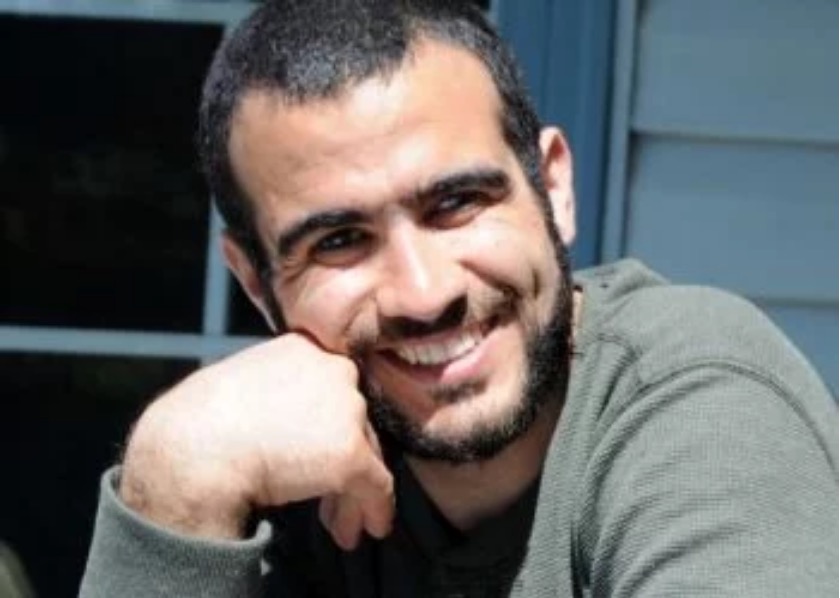
Omar_Khadr_-_child-250Canadian-born child soldier and torture victim Omar Khadr, the only citizen of a western democracy still held in the US Government detention center at Guantanamo Bay, Cuba, went on trial this week in the first war crimes prosecution of a child soldier in US history.

Under Stephen Harper, Canada is the only western country not to ask for the release of its nationals from the illegal prison camp. The Harper government has flouted court orders requiring it to take action in support of Khadr’s civil rights.

The U.N. Special Representative on Children in Armed Conflict warned Monday that the legality of Khadr’s trial is doubtful, and his prosecution sets a dangerous precedent that endangers child soldiers worldwide. Radhika Coomaraswamy asked the United States to halt the trial.

Jennifer Turner, Human Rights Researcher in the American Civil Liberties Union’s Human Rights Program, sums up the background to Khadr’s prosecution:

Khadr, then 15 years old, was taken to Bagram near death, after being shot twice in the back, blinded by shrapnel, and buried in rubble from a bomb blast. He was interrogated within hours, while sedated and handcuffed to a stretcher. He was threatened with gang rape and death if he didn’t cooperate with interrogators. He was hooded and chained with his arms suspended in a cage-like cell, and his primary interrogator was later court-martialed for detainee abuse leading to the death of a detainee. During his subsequent eight-year (so far) detention at Guantánamo, Khadr was subjected to the “frequent flyer” sleep deprivation program and he says he was used as a human mop after he was forced to urinate on himself.

In closing arguments before the judge’s ruling, Khadr’s sole defense lawyer, Lt. Col. Jon Jackson, told the judge, “Sir, be a voice today. Tell the world that we actually stand for what we say we stand for.”

The military judge trying Khadr, Col. Patrick Parrish, dismissed the motion without explanation.

It’s the economy, stupid

Marijuana

A column in the UK Guardian by BC writer Douglas Haddow predicts trouble for Canada’s economy if an upcoming referendum in California succeeds in legalizing pot this November.

[Y]ou may have noticed that Canadians have been behaving uncharacteristically uppity of late. This new-found swagger is a result of Canada having the dubious distinction of being the “least-bad-rich-world-economy” – an honour that would be rather unimpressive if the rest of the G8 wasn’t so persistently gloom-stricken….

But beyond the chorus of self-congratulatory backslapping coming from Ottawa, there has emerged a new and immediate threat of economic crisis that is being willfully ignored by Canadian politicians.

This November, in an effort to increase tax revenue, California will hold a referendum on whether or not to legalise the cultivation and use of marijuana. If passed, the change in law would be devastating to the Canadian economy, halting the flow of billions of dollars from the US into Canada and eventually forcing hundreds of thousands into unemployment.

BC Business estimates that province’s marijuana annual marijuana crop alone at $7.5 billion, most of it exported to the US. The magazine puts BC’s pot labor force at 250,000, while Nova Scotia’s entire labour force was less than twice that in July.

Ironically, support for legalisation is stronger in Canada than it is in California. Canada’s most prominent rightwing thinktanks have long supported legalisation, as do the majority of Canadians.

And yet… and yet…

But since the Conservative prime minister, Stephen Harper, formed a minority government in 2006, drug reform has been wiped off the agenda and the gears have grinded into reverse. In a bizarre twist that defies all rational thought, the Conservatives have decided they want to go in the opposite direction of the Canadian voter and emulate outdated Republican drug war policies that have already proved catastrophic in the US.

The Conservatives have proposed legislation that would introduce mandatory minimum prison sentences for marijuana producers. If passed, the legislation would result in spending billions in order to put more people in prison – the exact scenario that lead California into severe debt and towards legalisation. Even more stupefying, police in Montreal recently raided a “compassion centre” that legally distributes medicinal cannabis, and Conservative politicians have started calling for medicinal centres to be shut down across the country.

Ah, but the Harperites only masquerade as Conservatives. They actually represent the Authoritarian Party.

OMG! Shawn Graham!

If the misbegotten attempt to sell NB Power doesn’t flatten in NB Premier Shawn Graham, perhaps this Karate Kid tribute will do the trick. With fans like this…

Hat tip: SP

Market madness – open the doors

Reflecting on the Halifax Seaport Farmers’ Market’s opening day (previous posts here and here), Contrarian reader Jeff Pinhey writes:

You are kidding me.  An American Homeland Security regulation, the one requiring a Port Security plan in all ports with ships leaving for a US port, causes that silliness?  Let me see, if I were a terrorist trying to sneak into Canada so I could board a ship bound for the states, and I could get as far as the waterfront in front of the market, I certainly could get as far as…  Herring Cove, Eastern Passage, whatever.  Heck from the Eastern Passage government wharf, I could catch a bus into Dartmouth, take the ferry over and walk down the TransCanada Trail to the Market, have some nice locally grown food, then go find my ship and try to make my terror.

There is zero effective risk of those doors being used for that purpose when so many other easier options to accomplish the highly unlikely event being deterred exist.

There really are too many people in government working too hard to come up with reasons why things cannot be done, instead of why, or how, they can be done.

I don’t know if this is true generally of government, but it is certainly true of government employees acting in the name of security. We are living through a period of crazy imbalance. By simply invoking security, no matter how inane or preposterous, low level bureaucrats can trump every other consideration, no matter who valid of socially useful. A steady drumbeat of fear mongering about the threat of terrorism enforces this dynamic. The assumption is that politicians can’t stand up to this, because they will be crucified for lessening our security. I think the public is fed up, and a politician who gave voice to obvious simple truths about security excesses would gain support, not lose it.

The Farmer’s Market in Sydney was forced to leave that city’s waterfront pavilion over looney enforcement of goofy Homeland Security regulations. How long will we give free reign to small men with high F-scales?

A leadership role for Premier Dexter, perhaps?

Webfellows make strange politics

The following message greeted Scott Gillard, constituency assistant to Halifax Chebucto NDP MLA Howard Epstein, when he logged onto his Facebook account Tuesday:

[Maybe you should "like"] Michael Ignatieff. Many who like Jack Layton like him.

Well, Scott, for the sake of the country, maybe you should.

Statscan v. US Census Bureau

Contrarian reader Wallace McLean noticed something else about those maps:

[T]he US Census Bureau seems to generate unemployment data for the 3,140 counties and “county-equivalent” units of geography below state level, with an average population of under 100,000.

Statistics Canada only provides (roughly) comparable data for 73 “economic regions” within Canada, with no sub-provincial/territorial data for PEI or the territories. The 73 regions have an average population of over 450,000.

Even if you could get free and up-to-date data out of Statscan, it’s not nearly as fine-grained as what they seem to have in the States. There would seem to be some fundamental methodological difference in how the two stats agencies approach measuring employment and unemployment.

Snollygoster revival

Taegan Goddard wants to revive the political term snollygoster, n., classically defined by a passage from the October 28, 1895, edition of the Columbus Dispatch (as cited in the OED):

[A] fellow who wants office, regardless of party, platform or principles, and who, whenever he wins, gets there by the sheer force of monumental talknophical assumnancy.

Harry Truman sparked a previous revival in 1952, when he used the word in a whistle-stop speech at Parkersburg, W. Va.,  complaining about about politicians who make a show of public prayer:

I wish some of these snollygosters would read the New Testament and perform accordingly.

Alas, the OED has entries for neither talknophical or assumnancy, although the University of Windsor English Department once sponsored a poetry series by that name, which it described as, “until now, a nonce phrase with the one known recorded instance of 28 October 1895.”

Hat tip: Andrew Sullivan

« Older Posts